
+++++++++++++ english version below ++++++++++++++++++++++++++++++++++++++++++++++++
Kaj Osteroth studierte Bildende Kunst an der Universität der Künste Berlin und schloss ihr Studium 2006 als Meisterschülerin von Stan Douglas ab. 2008 folgte ein Magisterabschluss in Ethnologie und Kunstgeschichte an der Freien Universität Berlin.
Nach ihrem Studium führten sie wiederholte Arbeitsaufenthalte nach Johannesburg, Südafrika. Dort war sie zunächst im Umfeld der Johannesburg Art Fair sowie für das Goethe-Institut tätig und baute ein Netzwerk innerhalb der lokalen Kunst- und Kulturszene auf. Von 2011 bis 2013 initiierte sie das vom Institut für Auslandsbeziehungen (ifa) geförderte Austauschprojekt „Vanilla Facts“, das Künstler aus Berlin und Johannesburg in beiden Städten zusammenbrachte. 2014 war sie zusammen mit Lydia Hamann Artist in Residence in den Fordsburg Artists’ Studios in Johannesburg.
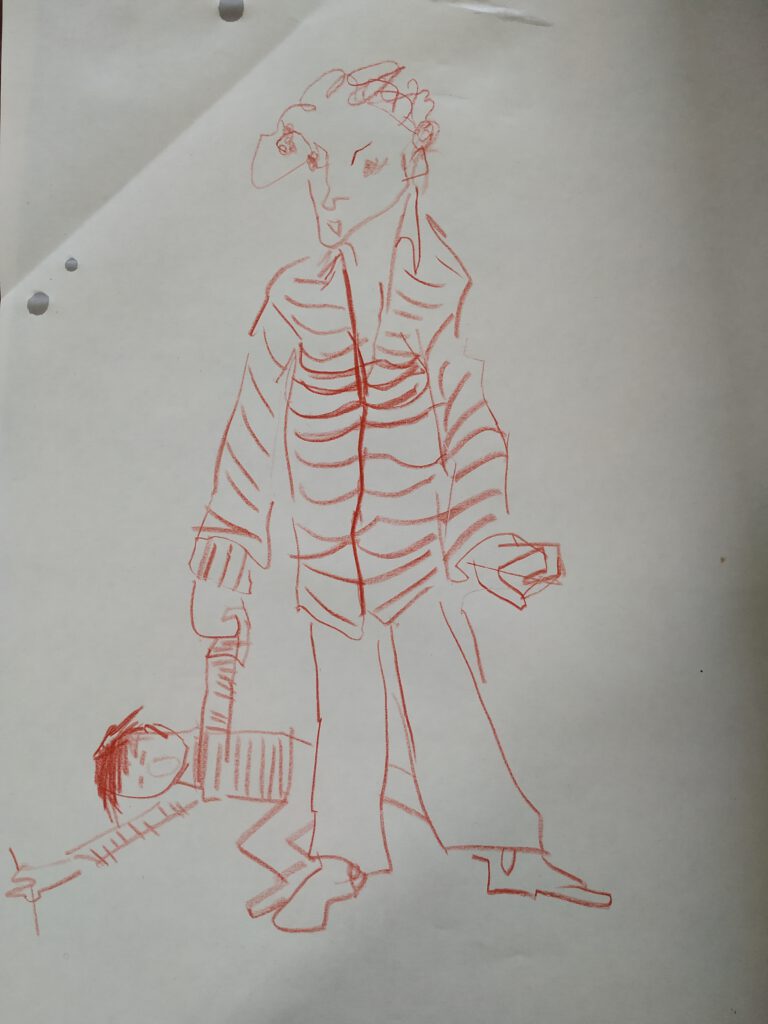
Kollaboration ist ein wiederkehrender Bestandteil ihrer künstlerischen Praxis. Von 2021 bis 2025 entwickelte sie gemeinsam mit der Kunsthistorikerin Sarah Hegenbart im Rahmen des durch das EU-Programm Horizon 2020 geförderten Projekts ART*IS (Art and Research on Transformations of Individuals and Societies) das dialogische Zeichenformat response*able drawing. Dieses wurde in internationalen Workshops, auf einer Konferenz an der Ruskin School of Art in Oxford sowie in Ausstellungen, unter anderem in Berlin, präsentiert.
Eine weitere Zusammenarbeit verbindet sie mit der Künstlerin Lydia Hamann. Als Duo hamann_osteroth entwickelten sie von 2007 bis 2021 eine feministische Malereipraxis, die sich mit Fragen von Autor:innenschaft, Aneignung und eurozentrischen Bildtraditionen auseinandersetzt. Ihre gemeinsame Methode basiert auf Wiederholung, Kopie und der bewussten Verschiebung malerischer Vorbilder. Im Spannungsfeld von Aneignung und Scheitern untersuchten sie die Bedingungen von Originalität und die produktive Dimension des „Nichtkönnens“. 2018 erschien ihre Publikation RADICAL ADMIRATION – A Feminist Picture Book. Auf Vorschlag der Kuratorin Yvette Mutumba wurde das Duo 2020 mit dem Villa-Romana-Preis ausgezeichnet.
Kaj Osteroth war mit ihren Werken sowie mit kollektiven und diskursiven Formaten an zahlreichen internationalen Ausstellungen, Residenzen und Workshops beteiligt, unter anderem im Museu de Arte de São Paulo, auf der 10. Berlin Biennale, im Kunstverein Braunschweig und im Künstlerhaus Bethanien sowie in unabhängigen Berliner Projekträumen wie uqbar/ABA, after the butcher und HilbertRaum. 2025 war sie Stipendiatin im Schloss Wiepersdorf im südlichen Brandenburg und erhielt 2026 ein Arbeitspakete Stipendium des Land Brandenburg.
Seit 2017 lebt Kaj Osteroth mit ihrer Familie im ländlichen Brandenburg. Dort arbeitet sie am Aufbau nachhaltiger Netzwerke zwischen Kunst, Institutionen und lokaler Öffentlichkeit und entwickelt Austauschformate für den ländlichen Raum.
++++++++++ english version ++++++++++++++++++++++++++++++++++++++++++
Kaj Osteroth studied Fine Arts at the Berlin University of the Arts, graduating in 2006 as a master student of Stan Douglas. In 2008, she completed an MA in Social and Cultural Anthropology and Art History at Freie Universität Berlin.
Following her studies, she undertook several extended working stays in Johannesburg, South Africa. There, she initially worked in connection with the Johannesburg Art Fair and the Goethe-Institut, establishing a network within the local art and cultural scene. From 2011 to 2013, she initiated Vanilla Facts, an exchange project funded by the Institute for Foreign Cultural Relations (ifa), which brought together artists from Berlin and Johannesburg in both cities. In 2014, she was Artist in Residence together with Lydia Hamann at the Fordsburg Artists’ Studios in Johannesburg.
Collaboration is a recurring element of her artistic practice. From 2021 to 2025, together with art historian Sarah Hegenbart, she developed the dialogical drawing format responseable drawing* within the framework of the EU Horizon 2020-funded project ART*IS (Art and Research on Transformations of Individuals and Societies). The format was presented in international workshops, at a conference at the Ruskin School of Art in Oxford, and in exhibitions, including in Berlin.
Another long-standing collaboration is with the artist Lydia Hamann. As the duo hamann_osteroth, they developed a feminist painting practice from 2007 to 2021 that engaged with questions of authorship, appropriation, and Eurocentric pictorial traditions. Their collaborative method was based on repetition, copying, and the deliberate displacement of painterly models. Working within the tension between appropriation and failure, they explored the conditions of originality and the productive dimension of “not knowing how.” In 2018, they published RADICAL ADMIRATION – A Feminist Picture Book. At the suggestion of curator Yvette Mutumba, the duo was awarded the Villa Romana Prize in 2020.
Kaj Osteroth has participated with her work, as well as through collective and discursive formats, in numerous international exhibitions, residencies, and workshops, including at the Museu de Arte de São Paulo, the 10th Berlin Biennale, Kunstverein Braunschweig, and Künstlerhaus Bethanien, as well as independent Berlin project spaces such as uqbar/ABA, after the butcher, and HilbertRaum. In 2025, she was a fellow at Schloss Wiepersdorf in southern Brandenburg, and in 2026 she received a working grant from Land Brandenburg.
Since 2017, Kaj Osteroth has lived with her family in rural Brandenburg. There, she works to build sustainable networks between art, institutions, and local communities and develops formats for exchange in rural contexts.