LYDIA HAMANN & KAJ OSTEROTH
www.fleeingthearch.org
++++++++++++++++ english version below ++++++++++++++++++++++
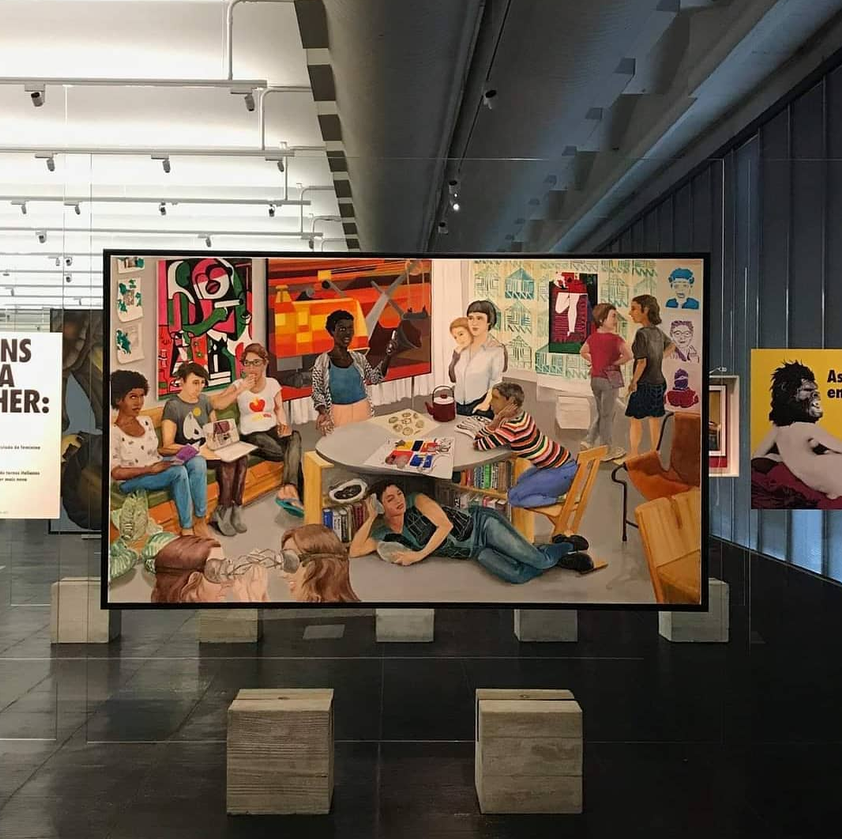
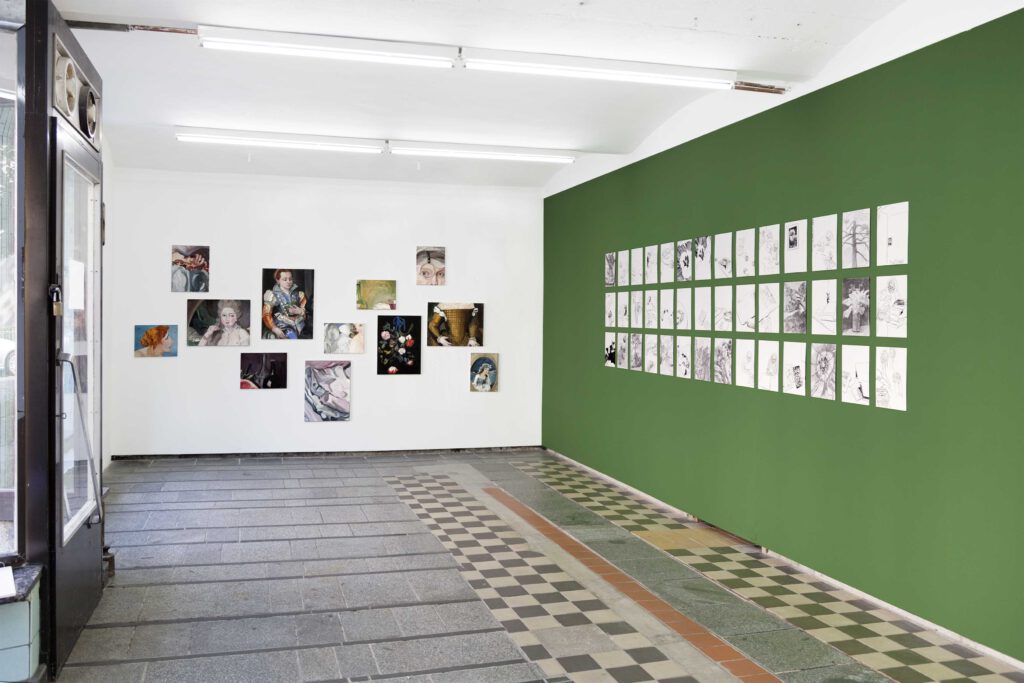
Wir sind ein feministisches Künstlerinnenkollektiv und arbeiten seit 2007 zusammen. Mit unterschiedlichen Medien (u.A. Performance und Skulptur), vor allem aber mit Hilfe der Malerei bewegen wir uns in einem ständigen Prozess der Auslotung von figurativen Bezügen, feministisch relevanten Dynamiken und interkulturellen Reibungsflächen. Dabei betrachten wir das gemeinsame Malen auch als performativen Akt, mit dem wir stereotype Zuschreibungen in der Kunst aufgreifen und erwünschte Brüche sichtbar werden lassen. Unsere Strategie ist es, feministische Malerei als Dialogform einzusetzen.
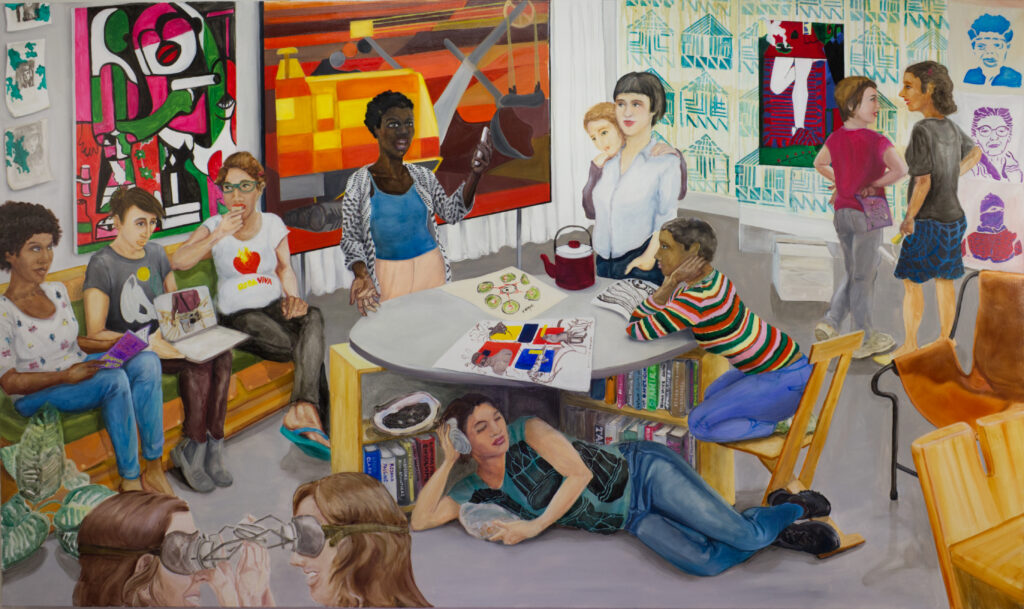
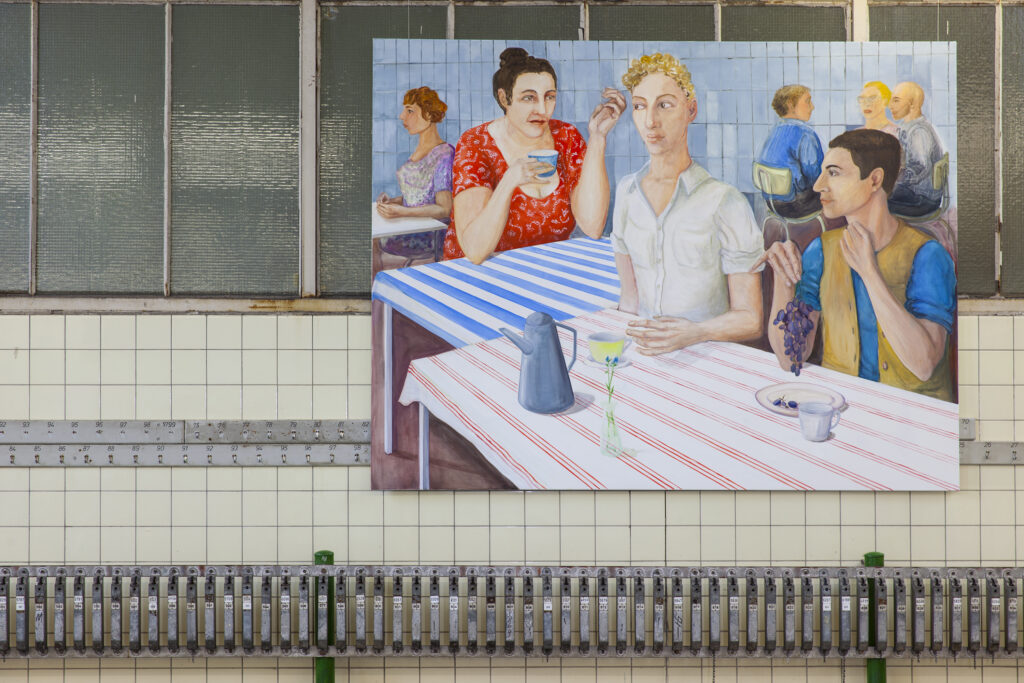
Uns interessiert also nicht allein der Formalismus im Bild sondern noch mehr die konzeptionelle Dynamik und Haltung, welche uns selbst durch diese Arbeit als zusammen wirkende Künstlerinnen erfasst und die in unserem Freundeskreis, sowie im Dialog mit Gesellschaft und Öffentlichkeit zum Ausdruck kommt. Unsere Figuren sind von uns ermächtigte Darsteller_innen, ausgestattet mit einer Portion Trotz, Beharrlichkeit und dem Wunsch nach Selbstbehauptung.
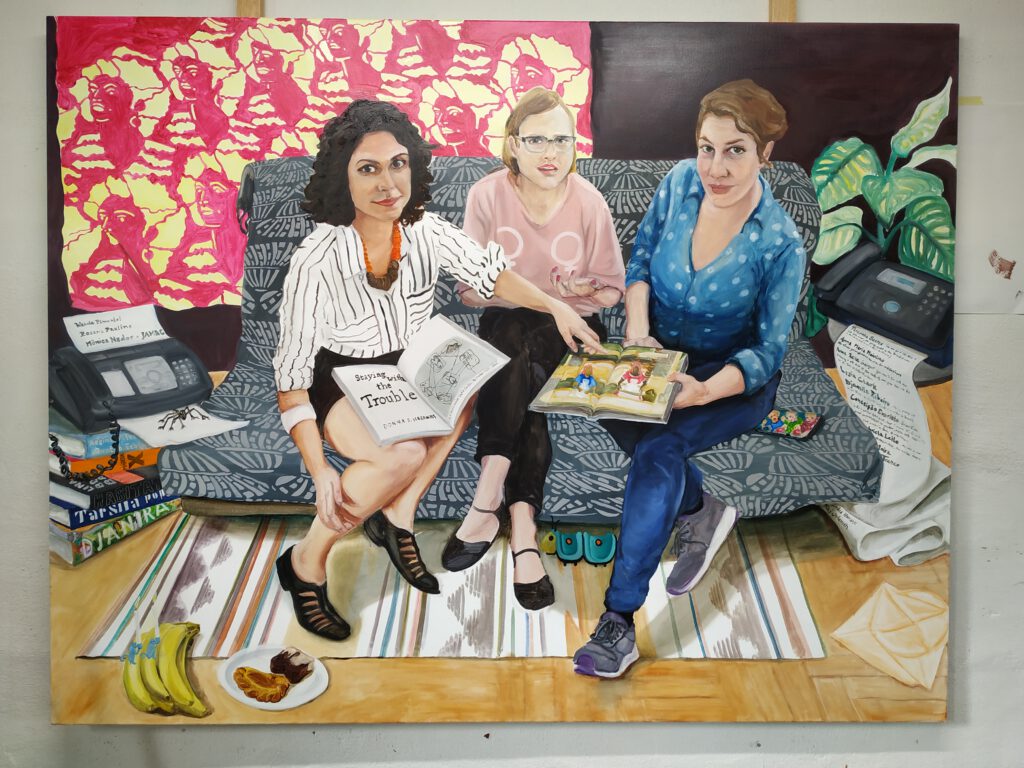
Wir erforschen in unserer Malerei Spielräume kollektiver Produktion, experimentieren mit Ansätzen aus der queer-feministischen Theorie und den Cultural Studies und produzieren kritisches Wissen und Widerstände. Das kollektive Malen ist für uns gleichzeitig künstlerische Praxis und radikale Geste, die eine dezidierte Auseinandersetzung mit unserer Rolle als Künstlerinnen einfordert. Die Thematisierung von Freund_innenschaft als eine Möglichkeit sogenannter „Care Arbeit“ hat sowohl als Bildgegenstand als auch in direkter Aushandlung einen bedeutenden Raum in unserer Zusammenarbeit.
++++++++++++++ english version +++++++++++++++++++++++++++
We are a feminist artists’ collective and have been working together since 2007. Using a range of media, including performance and sculpture, but above all painting, we engage in an ongoing exploration of figurative references, feminist dynamics, and intercultural frictions. We also understand painting together as a performative act through which we address stereotypical attributions within the art world and make deliberate ruptures visible. Our strategy is to use feminist painting as a form of dialogue.
We are therefore interested not only in the formal aspects of the image, but even more in the conceptual dynamics and attitudes that emerge through our work as collaborating artists and that find expression within our circle of friends as well as in dialogue with society and the public. Our figures are performers empowered by us, equipped with a measure of defiance, persistence, and a desire for self-assertion.
In our painting, we explore the possibilities of collective production, experiment with approaches from queer-feminist theory and Cultural Studies, and produce critical knowledge and forms of resistance. For us, painting collectively is both an artistic practice and a radical gesture that demands an explicit engagement with our role as women artists. The exploration of friendship as a possible form of so-called “care work” occupies an important place in our collaboration, both as a subject within the paintings and as something negotiated directly through our shared practice.